The Difference
Why cold-pressed
oils matter.
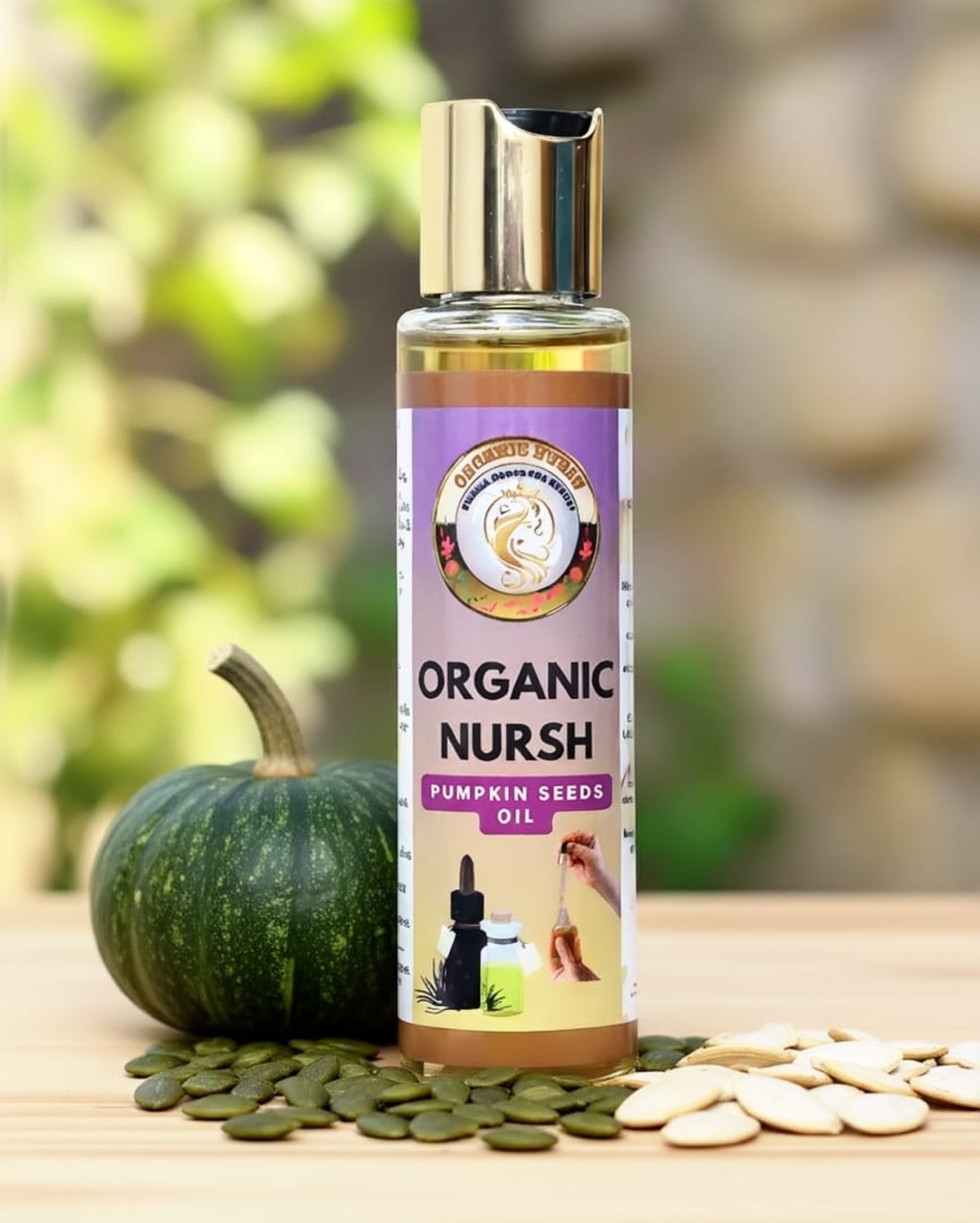
The way an oil is extracted decides what reaches your scalp. That's why every Organic Nursh formula is built exclusively on 100% cold-pressed oils — almond, argan, pumpkin seed, coconut and sesame among them — so what you pour out of the bottle is closer to the seed itself.
№ 01 · The heat problem
Most oils on the shelf are cooked.
Industrial mills push seeds through steel screws at speeds that generate temperatures over 200°C. The yield is high — but the heat oxidises delicate fatty acids and burns off polyphenols, vitamin E, and the natural aroma that tells you an oil is alive.
What comes out is then washed with hexane, bleached, and deodorised so it looks and pours the same — bottle after bottle, year after year. It's why we refuse to formulate with anything but cold-pressed oils.
№ 02 · Our standard
Cold-pressed only. No exceptions.
Every oil we formulate with — almond, argan, pumpkin seed, coconut and sesame — is 100% cold-pressed, extracted below heat-sensitive thresholds. No solvents, no bleaches, no deodorisers. What reaches your scalp is dense with everything the seed carried.
A side-by-side
Cold-pressed vs refined.
| Cold-pressed | Refined | |
|---|---|---|
| Extraction temperature | Under 45°C | Above 200°C |
| Method | Wooden ghani, slow press | Industrial expeller + solvents |
| Solvents | None | Hexane, bleach, deodorisers |
| Nutrients retained | Vitamin E, polyphenols, fatty acids | Largely destroyed |
| Aroma & colour | Warm, golden, full-bodied | Pale, neutral, refined |
| Shelf life | 6–12 months, fresh | 18–24 months, stabilised |
Read next